
How Do We Create Collaboration on Eye Level?
THIS COURSE WILL BE CONDUCTED IN GERMAN. We often assume that power is evenly distributed or doesn't play a role in self-organized and emancipatory organizations. But reality often looks different: Power exists—whether consciously or unconsciously—and remains a major taboo topic in many groups. Especially in self-organized structures where hierarchies are deliberately kept flat, power is often not openly addressed, making it difficult to deal with. This leads to conflicts.
This seminar addresses exactly that: We create a space where the topic of power is de-tabooed and reflected upon. Because only when power structures and power relations are made conscious can they be dealt with constructively.
Another common cause of conflicts: Diversity—that is, different backgrounds, experiences, and perspectives.
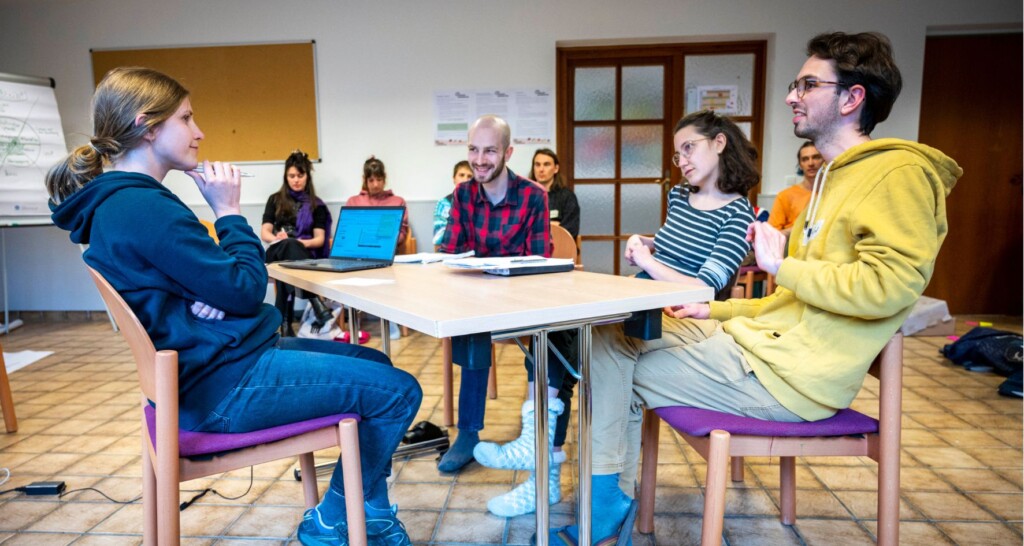
At the intersection of these two taboo topics, this course begins. We develop ways to positively utilize these factors. The course offers a mix of exchange, practice-oriented exercises, and targeted impulses. The need for concrete tools for work in our own groups will not be neglected.
Different groups deal with the tension field of diversity, power, and conflicts quite differently:
- „"Abuse of power doesn't exist with us because everyone meets on equal footing."“
Or rather: "Power relations are often subtly effective with us—we find it difficult to recognize and address them." - „"Diversity is explicitly welcome."“
Or rather: "The multitude of different perspectives, experiences, and strategies often challenges us." - „When conflicts arise, we name them in a non-violent way and resolve them constructively.".“
Or rather: "There are underlying tensions and conflicts that we avoid addressing."
Modules:
- We reflect on the emergence of power dynamics in groups and develop strategies to make them transparent and prevent abuse—for more trust and mutual support.
- We learn to use diversity as 'creative tension' and create communication spaces where even uncomfortable perspectives can be heard and integrated.
- We explore how clear roles and responsibilities can arise without solidifying structural hierarchies.
- We practice recognizing tensions and conflicts early, addressing them respectfully, and using them as opportunities for collective learning and stronger cohesion.
This course is for you if ...
- ...you are in an organization or group and feel responsible for group dynamics and processes.
- ...you want to bring more diversity into your organization or promote it but don't quite know how.
- ...you are tired of no one wanting to talk about 'leadership,' but there are unofficial 'leaders.'
- ...you finally want to discuss 'power' without shame, taboo, and conflict.
Learning objectives
In this course, we take time not only to name and reflect on the challenges and tension fields around the topics of power, diversity, conflicts, and leadership but also to tackle them constructively. Our goal is to develop ways together on how groups can work more effectively, resiliently, and sustainably. The aim is to create a working environment where everyone is heard and where power and diversity are recognized as resources for better collaboration and innovative solutions.
Trainers

Adrian Sina Vollmer
SelbstOrganisationsEntwicklung
Sina (he) is a coach, mediator, and organizational developer based in Freiburg. For many years, he has supported individuals and NGOs in crises, conflicts, and structural changes. His work often revolves around self-organization, participation, and collective leadership.

Laura Grossmann
Laura (she) specializes in organizational development for groups and organizations that have one or more of these characteristics: working with volunteers, political work, and work oriented towards grassroots democracy. In the association Humus, she combines her professional knowledge with her personal experience in activist contexts.
Alexandra Strickner
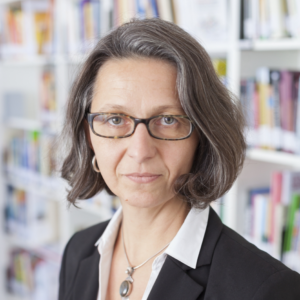
Alexandra (she) is a political economist, co-founder, board member and managing director of the Competence Center for Infrastructure Economics, Public Services and Social Provisioning. She has more than 20 years of experience in social change processes and in the building and strategic support of broad multi-actor networks & alliances in Austria and internationally through which economic alternatives to neoliberal globalization are developed and promoted. She has also co-founded Attac Austria, Anders Handeln (Austrian Trade Justice Plattform) and fair sorgen! Wirtschaften fürs Leben (care fairly! An Economy for Life).
 English
  German